
A Strategic Global Guide to Comprehensive Medical Recruitment
An Overview
This guide provides a strategic overview of how a comprehensive, 'turnkey' hiring solution can mitigate the risks of global recruitment by harmonising sourcing, compliance, and candidate retention. It explores the methodologies required to reduce time-to-hire for specialist consultants and ensure total alignment with governing bodies such as the GMC or AHPRA. By the conclusion, you will understand how to implement a recruitment infrastructure that prioritises both professional excellence and the logistical precision necessary for a seamless transition into your clinical team.
Key Takeaways
- Understand why viewing recruitment as a comprehensive lifecycle, from initial sourcing to post-placement integration, is essential for maintaining long-term clinical stability.
- Learn how a structured end to end medical recruitment strategy mitigates the risks of global hiring by managing complex credentialing requirements with bodies such as the GMC and AHPRA.
- Discover advanced methods for identifying and vetting scarce specialist consultants across global networks whilst integrating modern workforce solutions like telemedicine.
- Recognise the critical onboarding and relocation factors that ensure high candidate retention and professional satisfaction during the first 90 days of an international placement.
Defining End-to-End Medical Recruitment in 2026
Unlike the patient recruitment models often discussed in clinical trial contexts, true end to end medical recruitment represents a comprehensive management framework for the clinical workforce. It is a structured methodology which encompasses the entire professional lifecycle of a medical practitioner.
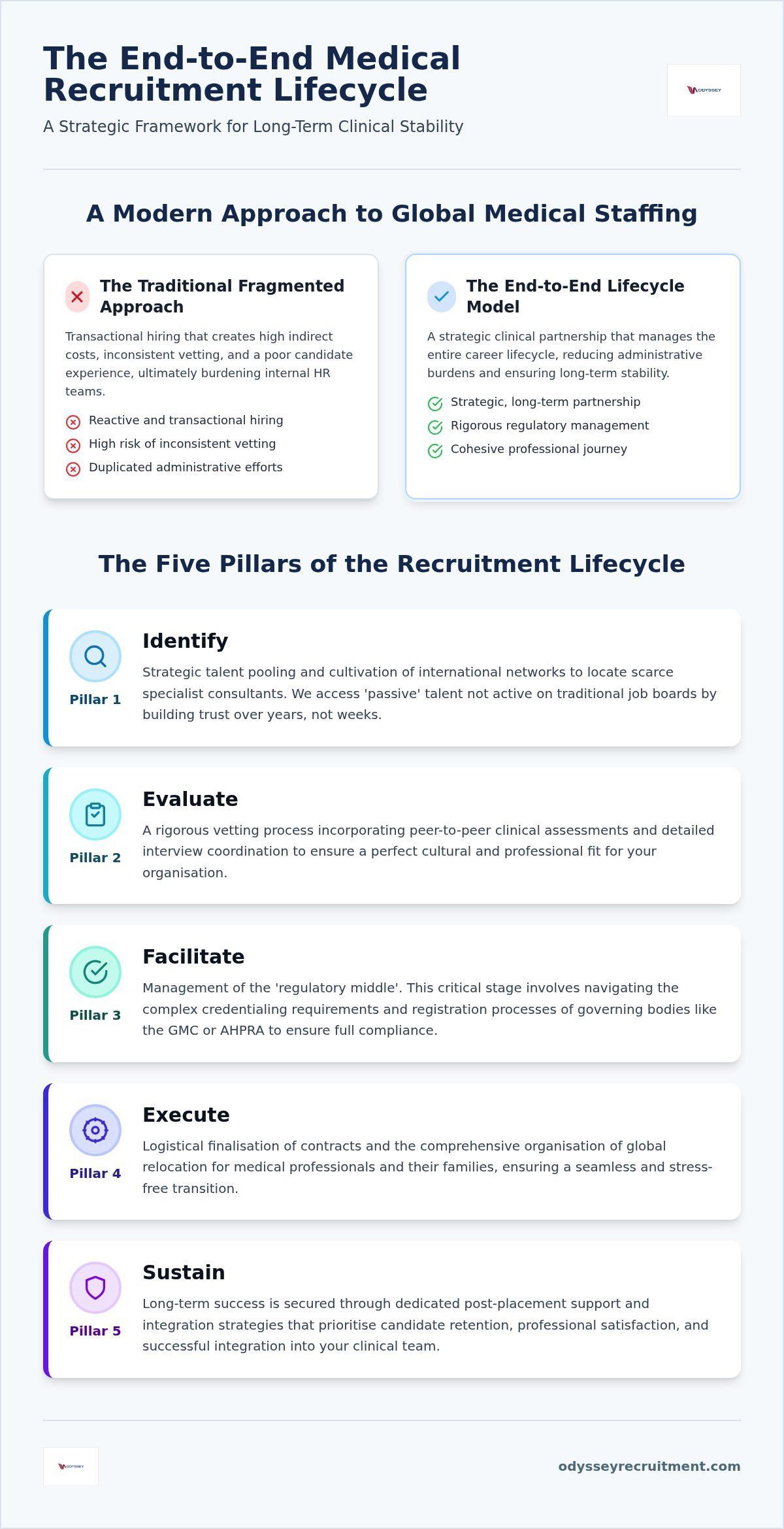
This model moves beyond the traditional, transactional approach of simply filling a vacancy; it functions as a strategic clinical partnership which aligns the long-term objectives of a hospital or clinic with the career trajectory of a high-calibre specialist. By centralising these functions, organisations can significantly alleviate the administrative burden on internal hospital HR departments, which are often ill-equipped to manage the nuances of international regulatory compliance.
The Five Pillars of the Recruitment Lifecycle
Effective workforce management relies on five distinct operational pillars that ensure clinical stability and professional excellence. Each stage must be handled with precision to avoid the common pitfalls of international placement:
- Identify: This phase involves strategic talent pooling and the cultivation of international networks to locate scarce specialist consultants who are not active on traditional job boards.
- Evaluate: A rigorous vetting process is essential, incorporating peer-to-peer clinical assessments and detailed interview coordination to ensure a cultural and professional fit.
- Facilitate: This critical stage manages the regulatory middle, navigating the complex credentialing requirements and registration processes of bodies like the GMC or AHPRA.
- Execute: The focus shifts to the logistical finalisation of contracts and the organisation of global relocation for medical professionals and their families.
- Sustain: Long-term success is secured through post-placement support and integration strategies that prioritise candidate retention and professional satisfaction.
Why Healthcare Leaders are Moving Away from Fragmented Sourcing
Modern Medical Recruitment planning increasingly rejects the use of multiple, disparate agencies in favour of a single, accountable partner capable of delivering end to end medical recruitment. Fragmented sourcing often conceals high indirect costs, such as the duplication of administrative efforts and the risk of inconsistent clinical vetting.
In a highly regulated international market, a unified approach provides essential risk mitigation and ensures a cohesive candidate experience. This consistency is vital for maintaining a prestigious employer brand, as it provides international doctors with a stable and professional point of contact from the initial expression of interest through to their clinical integration.
Global Sourcing and Clinical Vetting Strategies
The identification of elite clinical talent requires a sophisticated approach that transcends geographical boundaries and traditional advertising methods. Effective global sourcing and credentialing strategies are essential for identifying practitioners who possess the precise competencies required by modern healthcare systems.
This process is particularly vital when sourcing for highly specialised roles where the global talent pool is limited and the competition for expertise is intense. Relying on local databases is not sufficient for modern workforce planning; it requires a truly global perspective to ensure clinical stability and patient safety.
Accessing Passive Talent in the Global Medical Market
Qualified medical and dental professionals rarely frequent general job boards, as they are usually already established in secure, prestigious roles. A successful end to end medical recruitment methodology prioritises the cultivation of long-term relationships with International Medical Graduates (IMGs) and niche specialists who represent 'passive' talent.
By maintaining a global network, a boutique specialist can identify these individuals before they enter the open market. This proactive engagement is especially critical in dental recruitment and specialist medical fields, where specific technical proficiencies must be matched with the unique demands of different international jurisdictions. It's about building trust over years, not just weeks.
Rigorous Vetting: Beyond the CV
A candidate's curriculum vitae provides only a preliminary overview of their capabilities; a thorough evaluation requires primary source verification of all clinical qualifications. This rigorous scrutiny ensures that every practitioner meets the exacting standards of the destination country's regulatory bodies.
Beyond technical skill, assessing cultural fit is paramount for ensuring long-term retention. A doctor's ability to adapt to the operational nuances of the NHS, for instance, differs significantly from the requirements of private healthcare systems in the Middle East. Multi-stage clinical interviewing, including competency-based assessments, allows for a deeper exploration of a candidate's practical experience. Utilising peer-to-peer clinical references provides a layer of professional validation that standard HR checks don't provide, offering a clearer picture of a candidate's clinical judgment and bedside manner.
Strategic workforce modelling now frequently incorporates telemedicine staffing to bridge immediate gaps whilst permanent solutions are finalised. Balancing permanent placements with well-managed locum tenens assignments provides healthcare organisations with the operational flexibility needed to handle fluctuating patient volumes without compromising care standards. This dual approach is a hallmark of a mature end to end medical recruitment model that adapts to the specific pressures of the clinical environment. If your organisation requires a more tailored approach to identifying specialist talent, you might consider how bespoke recruitment services can enhance your current workforce planning.
Navigating the Regulatory Process: Credentialing and Compliance
The transition from a successful interview to clinical commencement is frequently obstructed by the complexities of international professional registration. This regulatory process represents a significant bottleneck where even the most promising placements can falter if they aren't managed with meticulous attention to detail.
A robust end to end medical recruitment service provides the necessary administrative scaffolding to guide candidates through these intricate systems whilst ensuring that the hiring organisation remains insulated from the logistical burden. By coordinating directly with governing bodies such as the General Medical Council (GMC), the Australian Health Practitioner Regulation Agency (AHPRA), and other international equivalents, a specialist partner ensures that all regulatory prerequisites are addressed well in advance of the anticipated start date.
Managing International Medical Registration
Central to this process is the coordination of primary source verification through platforms like EPIC (Electronic Portfolio of International Credentials) and the Educational Commission for Foreign Medical Graduates (ECFMG). These systems require a high degree of administrative precision; any discrepancy in documentation can lead to significant delays or the outright rejection of a registration application.
Managing these timelines is critical, particularly for specialist registration pathways which often involve complex peer-review processes. It's common for placements to fail at this stage due to inadequate preparation or a lack of understanding regarding the specific evidentiary requirements of different jurisdictions. A dedicated recruitment partner monitors these milestones, ensuring that every document is correctly verified and submitted within the required windows.
Compliance as a Risk Management Tool
Beyond the mechanics of registration, compliance serves as a fundamental risk management tool that protects a hospital's reputation and clinical standards. This involves conducting rigorous background checks and ensuring that candidates meet specific language proficiency and clinical communication requirements.
Adhering to
WHO's Global Strategy on Human Resources for Health ensures that recruitment practices remain ethically grounded and aligned with international standards of clinical governance. This level of scrutiny is indispensable in an
end to end medical recruitment model, as it guarantees that every practitioner is not only legally permitted to work but is also fully prepared to integrate into the local healthcare landscape safely. Meticulous compliance isn't just an administrative hurdle; it's a commitment to patient safety and long-term clinical stability.
Onboarding, Relocation, and Long-Term Retention
The success of an international placement isn't determined at the point of contract signature, but during the critical first 90 days of clinical practice. Traditional recruitment models often treat the arrival of a doctor as the conclusion of the process, yet this is precisely where the greatest risks to retention emerge.
A comprehensive end to end medical recruitment strategy recognises that clinical stability depends on the practitioner's ability to integrate into both a new professional environment and a new community. By prioritising structured onboarding, healthcare providers can significantly reduce clinical vacancy rates and protect their return on investment. This phase is about more than just administrative checklists; it's about fostering a sense of belonging within a new healthcare system that may operate under entirely different clinical governance structures.
Relocation Logistics for the Medical Professional
Moving a medical professional across borders involves managing the anxieties of an entire family unit. It's not enough to secure a visa; the process must encompass practical support for housing searches, identifying suitable schools, and understanding local cultural norms.
When these logistical burdens are managed by a specialist partner, the candidate can arrive with a clear focus on their clinical duties rather than being distracted by domestic stressors. This level of care fosters a sense of loyalty and 'stickiness' that transactional agencies simply cannot replicate. Reducing relocation anxiety is a direct contributor to clinical performance and long-term retention, ensuring that the specialist remains committed to their new post for years to come.
Integration and Clinical Mentorship
A boutique recruitment service acts as a bridge between the candidate and the hospital's internal onboarding teams. This involves facilitating clinical mentorship and ensuring that the practitioner understands the specific operational protocols of their new department. Post-placement follow-ups are a hallmark of this high-touch approach, allowing for the early identification of any integration challenges before they lead to contract termination.
Monitoring candidate satisfaction throughout the first year is essential for maintaining the long-term stability of the medical workforce. This proactive engagement helps prevent the clinical burnout that often stems from a poorly managed transition, securing the future of the department.
To ensure your international hires receive this level of dedicated support through an end to end medical recruitment framework, explore our permanent medical recruitment services today.
Odyssey Recruitment: Your Global Navigator
Since its founding in 2005, Odyssey Recruitment has established itself as a steady, authoritative hand in the complex world of international clinical staffing. We have spent over two decades refining a meticulous end to end medical recruitment methodology that prioritises precision, ethical standards, and long-term partnership. This isn't about rapid, volume-based transactions; it's about navigating the rigorous systems of global healthcare authorities on behalf of our partners.
By operating as a boutique specialist, we provide the level of personalised attention required to manage complex placements across the UK, Australia, Canada, and the Middle East. Our role as a trusted advisor ensures that the specific pains of healthcare HR, such as vacancy-driven burnout and regulatory delays, are mitigated through proactive, expert management.
A Boutique Approach to Global Talent
Large, volume-driven agencies often struggle with the nuances of specialist clinical vetting and the administrative weight of international compliance. Our approach is different. We focus on depth of expertise across the Medical, Dental, and Telemedicine sectors, ensuring that every candidate is not just qualified but culturally and professionally aligned with the destination organisation.
This commitment to meticulous standards has led to successful consultant placements in diverse environments, from major metropolitan hospitals in Australia to specialised clinics in the Middle East. We don't just find candidates; we manage the entire lifecycle of the recruitment process to ensure that the transition for both the hospital and the practitioner is seamless and sustainable.
Securing Your Healthcare Workforce
The global competition for clinical talent is intensifying, making future-proof workforce planning more essential than ever. A partnership with Odyssey Recruitment allows healthcare providers to access a global network of elite professionals whilst maintaining total compliance with local standards.
Our end to end medical recruitment model provides the clinical stability needed to navigate these upcoming challenges with confidence. Whether you require permanent medical recruitment or flexible locum assignments, we provide the global connectivity and local knowledge necessary to secure your clinical team's future. It's a strategic solution for an increasingly complex global market.
Contact Odyssey Recruitment for a Strategic Consultation to learn how our global navigator approach can streamline your international hiring and ensure long-term clinical excellence.
Frequently Asked Questions
What exactly is included in an end-to-end medical recruitment service?
A comprehensive end to end medical recruitment service incorporates every stage of the practitioner’s transition to ensure clinical stability. This includes:
- Strategic sourcing and clinical credentialing
- Primary source verification of credentials
- Coordination with international medical boards
- Relocation and family integration support
This holistic framework ensures that the hiring organisation is supported throughout the entire regulatory lifecycle, significantly reducing the administrative burden on internal HR teams.
How long does the international medical recruitment process typically take?
The timeline for international medical recruitment typically ranges from six to twelve months, depending on the destination, jurisdiction and the complexity of the specialist registration pathway.
Factors such as primary source verification of credentials and the processing times of regulatory bodies like the GMC or AHPRA significantly influence the duration. It's essential to plan for these milestones early to ensure a predictable commencement date and maintain clinical service continuity.
Can an end-to-end agency help with GMC or AHPRA registration?
A specialist agency provides extensive administrative support for GMC or AHPRA registration by coordinating the primary source verification of clinical credentials.
Whilst we don't offer legal immigration advice, we guide candidates through the specific evidentiary requirements and documentation standards of these regulatory bodies. This meticulous oversight helps prevent common pitfalls that lead to registration delays, ensuring that all practitioners meet the necessary local standards before their placement begins.
What is the difference between locum tenens and permanent recruitment services?
Permanent recruitment focuses on long-term clinical stability and the full integration of a practitioner into a healthcare facility's core team.
Conversely, locum tenens assignments provide operational flexibility, allowing organisations to bridge immediate staffing gaps or manage fluctuating patient volumes with temporary expertise. Both services are essential components of a robust end to end medical recruitment strategy, offering tailored solutions to meet different workforce planning requirements and clinical demands.
How do you ensure the quality of international medical candidates?
Quality assurance is maintained through a rigorous, multi-stage clinical vetting process that includes primary source verification of all qualifications. We conduct competency-based interviews and secure peer-to-peer clinical references to validate a candidate's professional judgment and technical proficiency. This high-level scrutiny ensures that every practitioner isn't only legally compliant but also possesses the clinical excellence and cultural adaptability required to thrive in their new professional environment.
Do you provide recruitment services for telemedicine and remote clinical roles?
We provide specialised recruitment services for telemedicine and remote clinical roles, recognising the increasing importance of digital health in modern workforce modelling. Our expertise includes sourcing qualified practitioners for virtual consultations and remote diagnostic services across various medical and dental disciplines. This approach allows healthcare providers to extend their reach and manage patient care more efficiently, particularly in underserved regions or when local specialist availability is limited.
What are the benefits of using a specialist agency over a generalist recruiter?
Specialist agencies possess a deep understanding of the complex regulatory and clinical landscapes that generalist recruiters often lack. This niche expertise allows for more precise candidate matching and the ability to navigate the intricate registration processes of international medical boards. A boutique specialist also provides personalised attention, valuing long-term partnerships and professional standards over the volume-driven, transactional approach typically found in larger, more generalised recruitment firms.
How does Odyssey Recruitment support doctors moving from the UK to Australia?
We support practitioners transitioning from the UK to Australia by managing the complexities of AHPRA registration and the specific requirements of the Australian healthcare system. Our role involves coordinating the necessary documentation and providing practical advice on relocation logistics, such as housing and family integration. This comprehensive support ensures that doctors can focus on their clinical responsibilities whilst we navigate the administrative hurdles of their international move.
19 August 2026
Share this post on Social Media
More Insights